
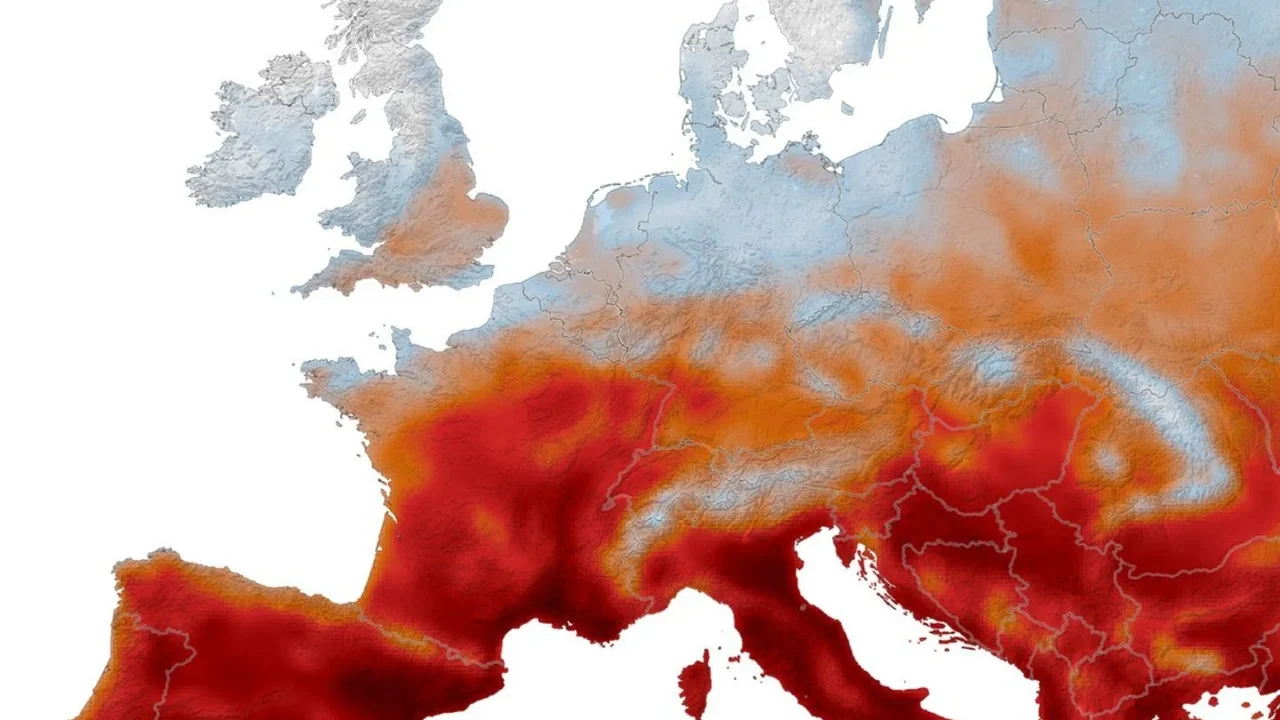
NASA Earth Observatory satellite data has confirmed that Western Europe experienced a sequence of unprecedented heat waves throughout the summer of 2026. This extreme weather event shattered longstanding temperature records, pushed daytime highs past 40 degrees Celsius across broad regions, and caused serious consequences including wildfires, infrastructure failures, and thousands of heat-related deaths.
What Happened
The unusual summer began in May 2026 with a heat dome triggering exceptional temperatures that broke records in multiple countries, according to NASA Earth Observatory analysis. By mid-August, Europe was enduring its fifth major heat wave of the season, with temperatures soaring well above 40°C (104°F) over extensive areas. These episodes were characterized by protracted periods of intense heat that often persisted overnight, a rarity for the region’s typically mild summers.
NASA combined satellite observations with its GEOS (Goddard Earth Observing System) global atmospheric model to produce daily maximum surface air temperature maps spanning May 1 to August 19, 2026. The data highlighted widespread zones exceeding 40°C, visualized as deep red areas in animations provided by NASA.
Key Facts
Several temperature records were obliterated during this period. The UK Met Office reported a May 26 reading of 35.1°C (95.2°F) in London, surpassing the previous May record by 2.3°C (4.1°F). In France, Bordeaux saw its maximum temperature rise on three consecutive days in June, topping out at 42.5°C on June 24 as reported by Météo-France. Slovakia also registered all-time national highs for both day and night temperatures in August.
Copernicus Climate Change Service confirmed that combined June and July temperatures in Western Europe reached their highest levels on record. The heatwaves exacerbated an ongoing severe drought, lowering river levels, disrupting water and power supplies, damaging transportation infrastructure, and fueling large wildfires in formerly unaffected areas.
Preliminary analyses estimate around 10,000 excess deaths linked to the extreme heat, impacting countries including the UK, France, Germany, and Belgium. The World Health Organization underscores heat stress as the leading cause of weather-related deaths globally, particularly affecting older adults and those with pre-existing health conditions.
What This Means
These record-breaking heat waves reveal the increasing intensity and frequency of extreme weather events in Europe, bearing serious implications for public health, infrastructure resilience, and climate adaptation strategies. The persistence of overnight heat complicates human recovery, leading to elevated risks of heat exhaustion and fatal heatstroke, especially where access to air conditioning remains limited.
Urban planners and policymakers face mounting pressure to address heat vulnerability, as European cities commonly lack extensive air conditioning systems found in regions like the United States. Satellite thermal mapping, such as that generated from NASA missions like ECOSTRESS, is becoming a critical tool for identifying urban heat islands and guiding infrastructure improvements to enhance cooling capacity, increase green space, and adopt heat-reflective materials.
The drought and wildfire patterns linked to these heat waves also pose existential risks to agriculture and biodiversity, compounding the urgent need for integrated climate resilience frameworks. This trend underscores the broader challenges of climate change, emphasizing the necessity for coordinated global and local efforts to safeguard human and environmental health from warming impacts.
Background
NASA’s Goddard Earth Observing System (GEOS) model and satellite data sets have long been utilized to monitor atmospheric processes and surface temperatures worldwide. The 2026 European heat waves are among the most intense analyzed through these tools, providing detailed temporal and spatial information on thermal anomalies linked to climate extremes.
Prior to this summer, Europe experienced notable heat wave events; however, 2026’s sustained sequence and unprecedented magnitudes highlight shifting climatic baselines and the growing influence of anthropogenic global warming. This has led to increasing research into demographic vulnerabilities, with studies showing disproportionate impacts on aging populations in Southern Europe.
Analysis
Experts such as Anamika Shreevastava, a researcher who studied urban heat islands using NASA data, emphasize the critical need for enhanced air conditioning and urban cooling strategies. She notes that international energy data flag a stark disparity in air conditioning penetration between Europe (23% of homes) and the U.S. (90%), contributing to markedly higher heat-related mortality in European cities.
Further research by Stanford’s Qinqin Kong, recognized by NASA’s Earth and Space Science and Technology awards, maps how increasing heat exposure is expected to frequently exceed human physiological tolerance, disproportionately threatening older adults. This scientific work aims to inform heat action plans and public health preparedness worldwide.
What Comes Next
Ongoing satellite monitoring combined with climate modeling will continue to track evolving heat wave patterns and their socio-environmental impacts. Researchers and policymakers are expected to intensify efforts to develop targeted mitigation strategies, including improved urban planning, emergency response protocols, and public health infrastructure enhancements based on NASA’s Earth science data.
Sources
This article is based on reporting and publicly available information from the following sources:
Read more Climate & Environment stories on Goka World News.