
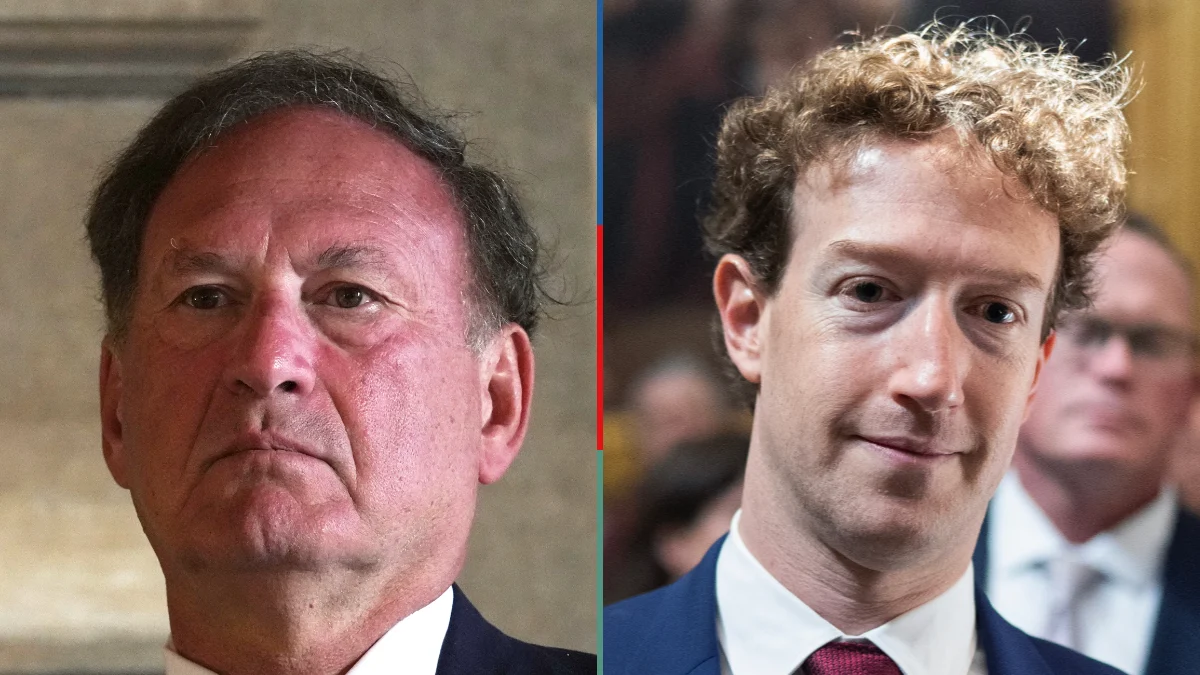
In April, the U.S. Supreme Court issued a landmark ruling that effectively dismantled crucial protections under Section 2 of the Voting Rights Act, adopting a race-neutral standard that complicates efforts to challenge racially discriminatory voting maps. This judicial approach echoes through Big Tech’s content moderation systems, which similarly apply race-neutral methodologies in AI-driven trust and safety protocols, resulting in disproportionate harms to communities of color.
What Happened
On April 2026, in the case of Louisiana v. Callais, the Supreme Court’s conservative majority, led by Justice Samuel Alito, rendered a decision that severely limits the ability to contest electoral district boundaries that dilute the political influence of voters of color. The majority opinion explicitly rejects evaluations based on racial impact or outcomes, insisting instead on a race-neutral analysis that presumes racial inequality to be a relic of the past. This ruling undermines the enforcement of Section 2 of the Voting Rights Act, a legal safeguard enacted to prevent discriminatory voting practices.
Simultaneously, leading social media companies, notably Meta, utilize AI-driven content moderation systems that treat hate speech and related harmful content uniformly regardless of the racial context. Internal reports revealed that these AI tools apply identical scrutiny whether the targets are white or Black, ignoring the greater severity and contextual complexities of abuse aimed at people of color. This race-neutral stance mirrors the Supreme Court’s reasoning, contributing to the underrecognition and mishandling of race-based discrimination online.
Key Facts
The Supreme Court ruling cripples Section 2 of the Voting Rights Act within the United States, effectively raising legal standards by requiring plaintiffs to prove explicit racial intent behind vote dilution—a notoriously difficult burden. Justice Elena Kagan’s dissent highlighted that the ruling makes successful challenges to discriminatory district maps nearly impossible, even when minority voting power is visibly undermined.
On the AI front, Meta’s content moderation infrastructure employs a combination of machine learning and human oversight but is fundamentally structured to ignore race in decision-making. This uniform treatment extends to the classification and mitigation of hate speech and harassment, conflating discussions about racism by communities of color with actual hate speech. The moderation systems prioritize intent in judging harmful content, a factor notoriously elusive for AI tools to detect accurately.
What This Means
This dual embrace of race-neutrality carries significant consequences for racial equity in both public governance and digital spaces. By adopting a standard that discounts racial impacts unless explicit discriminatory intent is established, the Supreme Court has effectively lowered protections that historically enabled communities of color to seek redress against electoral discrimination, likely resulting in decreased political representation for these groups.
Similarly, race-neutral AI moderation perpetuates systemic inequalities online by failing to account for the context and historical weight of race-based hostility. Since AI systems struggle to decipher nuanced social signals, relying heavily on intent and uniform treatment, harmful content targeting marginalized groups may slip through the cracks or be misclassified, further marginalizing affected communities. This alignment between legal doctrine and AI practice signals a broader ideological shift, which scholars argue risks normalizing and entrenching racial disparities across societal institutions.
For individuals, this means restricted political voice and underprotection against discrimination in the most fundamental democratic processes, alongside increased vulnerability to racial harassment on digital platforms. For the industry and regulators, the challenge is to develop AI governance models and legal frameworks that transcend simplistic race-neutral approaches and recognize the nuanced realities and consequences of racial discrimination.
Background
Prior to this ruling, Section 2 of the Voting Rights Act served as a critical tool to challenge voting maps that diluted minority voting strength, focusing on adverse outcomes rather than the often elusive proof of discriminatory intent. This legal standard helped uphold a multiracial democracy by safeguarding equal political participation for communities of color.
In contrast, AI moderation systems have historically struggled with biases embedded in training data and algorithms, but until now have largely operated under the premise that fairness means treating all content and users equivalently, irrespective of race or context. Advocacy groups have long criticized such race-neutral systems for failing to protect against disproportionate harms experienced by marginalized communities.
What Remains Unclear
It is not yet confirmed whether legal challenges or legislative measures will emerge to counteract the Supreme Court’s restrictive interpretation of Section 2 in Louisiana v. Callais. On the AI side, regulatory scrutiny of content moderation practices remains evolving, and it is uncertain when or how rules might be adapted to require more race-conscious approaches in algorithmic governance.
What Comes Next
Voting rights experts have proposed electoral reforms such as proportional representation as possible alternatives to overcome the hurdles imposed by the new Supreme Court ruling. Meanwhile, discussions continue about decentralized social media networks and enhanced user control over AI-driven content recommendation systems that could mitigate systemic racial harms online. These avenues represent nascent responses to the challenges posed by race-neutral doctrines in both public and private spheres.
Sources
This article is based on reporting and publicly available information from the following sources:
Read more Politics stories on Goka World News.