
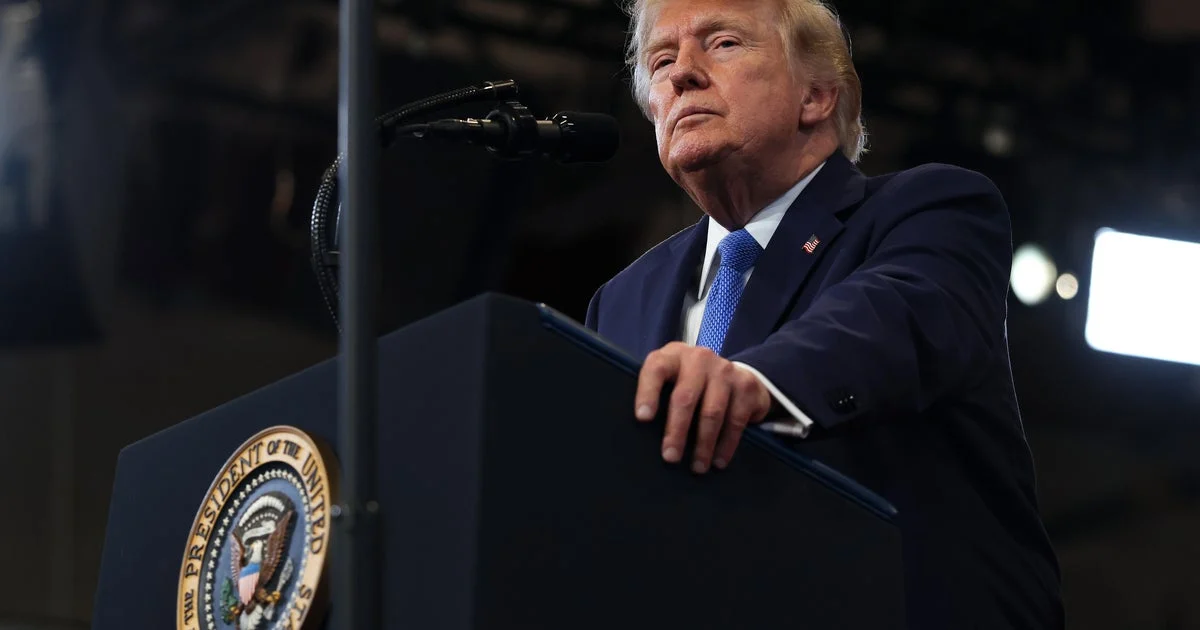
President Donald Trump’s legal team issued a formal defamation threat on August 17 against the left-leaning think tank Center for American Progress (CAP), demanding a retraction, apology, and compensation following the release of a July report. The report concluded that National Guard deployments under Trump’s administration had no measurable effect on reducing violent crime in cities where they were deployed. The deadline given to CAP to comply was 5 p.m. on the following Friday, with a lawsuit seeking at least $5 billion in damages if unmet.
What Happened
The conflict arose when CAP published an analysis in July stating there was “no evidence that National Guard deployments have reduced violent crime” in cities where troops were deployed, including Los Angeles, Washington D.C., Memphis, and New Orleans. The deployments had been ordered by the Trump administration starting in June 2025, initially in Los Angeles to protect federal immigration and law enforcement officials amid protests, followed by similar actions in other major cities purportedly to curb violent crime.
In response to the report, Trump’s attorney, Alejandro Brito, sent a letter accusing CAP of materially false statements aimed at damaging the president’s reputation. Brito set a strict deadline for CAP to retract the report and offer compensation, warning of a defamation suit if the demands were not met. CAP’s attorney, Kevin Metz, rejected the allegations, emphasizing the importance of truthful debate within American democracy. Both letters were obtained by CBS News.
CAP President and CEO Neera Tanden released a statement condemning the legal threat as an attempt to silence independent analysis and uphold First Amendment protections. Tanden stressed that public policy disagreements should be resolved through debate, not intimidation.
Key Facts
The Trump administration first deployed National Guard troops to Los Angeles in June 2025, targeting federal immigration enforcement security. Two months later, President Trump expanded deployments, including a controversial announcement to send Guard troops to Washington, D.C., to address crime and disorder. Subsequent deployments followed in Memphis and New Orleans. The FBI reported nationwide violent crime decreased in 2025 despite these operations.
CBS News legal contributor Jessica Levinson, a Loyola Law School professor, noted the challenge Trump would face in court due to the “actual malice” standard public figures must meet in defamation cases. Levinson explained this means Trump must prove CAP knowingly published false information or did so recklessly, which is unlikely given the nature of the dispute over crime statistics. Levinson also noted Trump must establish that the statements targeted him personally rather than critiquing his administration broadly.
What This Means
This legal threat highlights the tensions between political figures and independent policy analysts in the current polarized environment. The case illustrates how empirical data and factual analysis on contentious topics like crime and public safety can become flashpoints in political battles. For the public, the dispute underscores the challenges of separating political rhetoric from evidence-based policy evaluation.
Moreover, Trump’s readiness to pursue a high-stakes defamation claim signals a continuation of his pattern of using litigation as a means to counter critical institutions and voices. The legal standards protecting freedom of speech and rigorous policy debate will be tested if a lawsuit proceeds, potentially affecting future interactions between political leaders and think tanks.
Citizens watching the unfolding dispute might see it as emblematic of the broader national dialogue on crime, governance, and transparency. The outcome could shape how policy evaluations by independent groups are received or challenged by elected officials moving forward.
Background
National Guard deployments ordered by the Trump administration began in mid-2025 amid protests and calls to address violent crime spikes. The approach attracted both support and criticism, with critics questioning the effectiveness and motives of using military-style forces in civilian law enforcement settings. CAP’s report was part of an ongoing nationwide debate on the appropriate response to urban crime challenges.
What Remains Unclear
It remains uncertain whether Trump will proceed with filing a defamation lawsuit against CAP, or if the dispute will be resolved outside court. The precise legal strategies and how courts might interpret the application of defamation standards in such politically charged contexts are also unclear.
Sources
This article is based on reporting and publicly available information from the following source:
Read more Politics stories on Goka World News.