
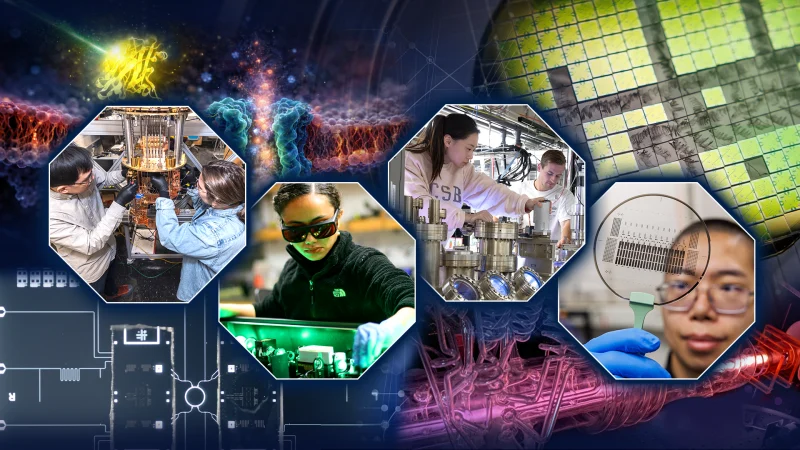
The U.S. National Science Foundation (NSF) has pledged more than $290 million to fund eight Quantum Leap Challenge Institutes, driving forward the scientific understanding and technological development of quantum science. Established as part of the 2018 National Quantum Initiative Act, this program accelerates research in quantum computing, sensing, communication, and related areas. Leading universities and research centers across 19 states will collaborate on projects aiming to overcome fundamental challenges in quantum information science.
What Happened
In a significant expansion of the NSF Quantum Leap Challenge Institutes program launched in 2020, three new institutes have been established while five previously funded institutes will receive renewed grants. Each institute will obtain between approximately $28 million and $37 million over the next five years. The funded entities, led by prominent researchers in quantum science, are pursuing breakthroughs ranging from developing fault-tolerant quantum computing systems to creating highly sensitive quantum sensors capable of probing biological processes at unprecedented resolution.
The institutes employ a mix of methods including advanced materials science, hardware and software experimentation, semiconductor fabrication, and quantum algorithm design. Their collaborative networks extend beyond academia to include U.S. Department of Energy national laboratories, the Department of War, the National Institute of Standards and Technology, and over 30 partner companies, facilitating rapid translation of discovery into scalable technologies.
Key Facts
This comprehensive NSF investment supports 36 institutions across 19 U.S. states, enabling research teams to collectively explore various facets of quantum information science. Funding allocations span a range of specialized fields such as superconducting qubits, quantum error correction, hybrid quantum architectures, quantum sensing for biophysics, and quantum simulations. The program also incorporates robust educational initiatives training hundreds of graduate students, undergraduates, and early-career scientists through internships, summer schools, and mentorships extending to community colleges and K-12 outreach.
The eight Quantum Leap Challenge Institutes are:
- Institute for Fault Tolerant Quantum Systems, Architectures and Applications (FTQSAA)
- Institute for Hybrid Quantum Architectures and Networks (HQAN)
- Institute for Manufacturable and Resilient Superconducting Quantum Information Systems (MARQUIS)
- Institute for Physics and Engineering of Practical Quantum Error Correction (PRACTIQAL)
- Institute for Quantum Computation (CIQC)
- Institute for Quantum Sensing for Biophysics and Bioengineering (QuBBE)
- Institute for Quantum Systems through Entangled Science and Engineering (Q-SEnSE)
- Institute for Robust Quantum Simulation (RQS)
What This Means
This sustained investment underscores the U.S. government’s commitment to maintaining a leading edge in the rapidly evolving quantum technology landscape. By fostering collaborative, multidisciplinary research across institutions and sectors, the NSF’s initiative aims to solve critical scientific and engineering challenges that currently limit quantum devices’ practical capabilities. Progress in fault tolerance, error correction, and hybrid system integration could bring us closer to reliable, scalable quantum computers, potentially revolutionizing fields like drug discovery, materials science, and complex system modeling.
Moreover, the development of next-generation quantum sensors holds promise for transformative applications beyond computing, including early disease detection and precision measurement that surpass classical technology limits. Importantly, this network of institutes also seeks to expand the pipeline of quantum science talent through expansive education and training programs, directly addressing workforce needs vital for sustaining innovation and economic growth in emerging quantum industries.
Background
The NSF Quantum Leap Challenge Institutes program was initially launched in 2020 as a strategic implementation of the National Quantum Initiative Act of 2018, which mandated coordinated federal efforts to accelerate U.S. leadership in quantum science and technology. Since its inception, the program has supported pioneering experimental and theoretical research, contributing critical insights toward building next-generation quantum devices that harness entanglement, superposition, and other quantum phenomena.
What Comes Next
Over the next five years, the institutes will continue to conduct deep research and development cycles, engage with industry partners, and expand educational outreach. This phase includes iterative design improvements in quantum hardware and algorithms as well as efforts to transition validated scientific advances into industrial applications. The NSF will oversee progress through regular review and will support outreach activities that cultivate future quantum scientists and engineers.
Sources
This article is based on reporting and publicly available information from the following sources:
Read more Science & Technology stories on Goka World News.