
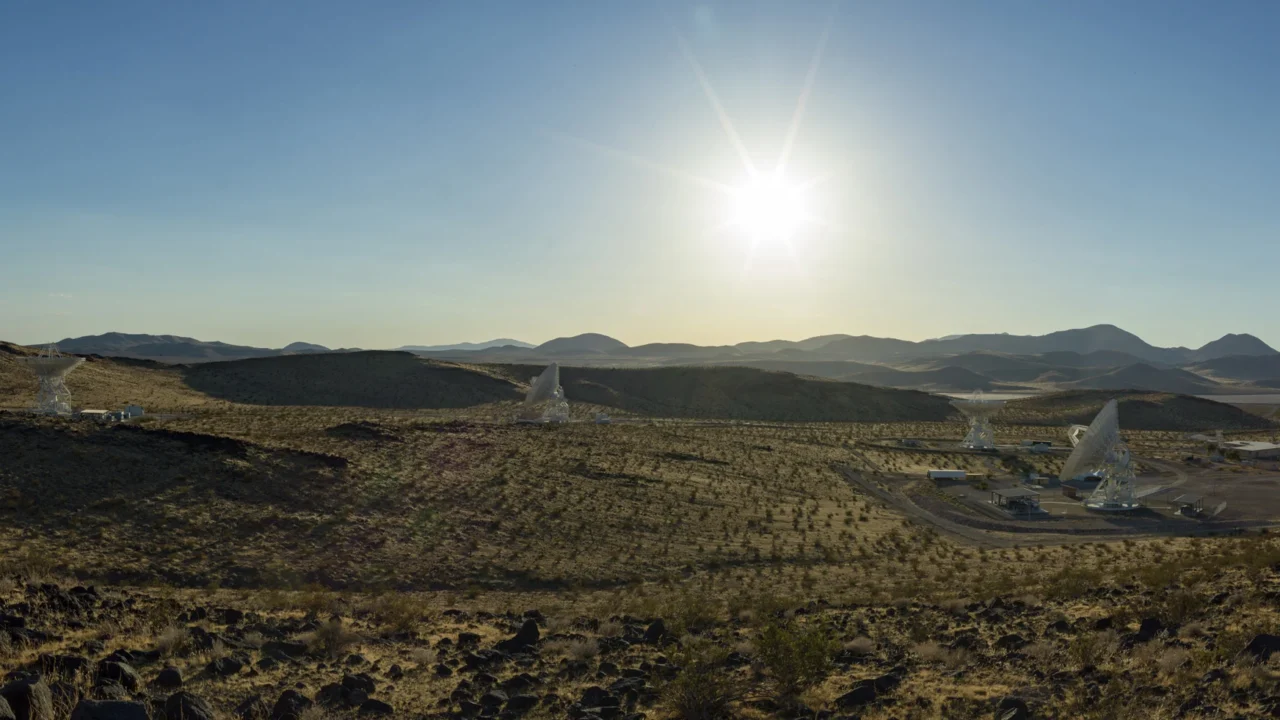
NASA has bolstered its Deep Space Network (DSN) with the addition of a new 34-meter-wide radio antenna, Deep Space Station 23 (DSS-23), at the Goldstone Deep Space Communications Complex in California. This latest installation promises enhanced communication capabilities for dozens of spacecraft exploring the solar system and beyond.
What Happened
The newly completed DSS-23 antenna became operational on August 3, 2026, following a testing period from May through July that verified its functionality. Located near Barstow, California, at NASA’s Goldstone complex, this dish is a key part of NASA’s ongoing Aperture Enhancement Project, initiated in 2009 to upgrade and expand the DSN. DSS-23 joins the existing network of antennas, which includes three other 34-meter dishes and a large 70-meter antenna at the same site.
Since commencing operations, DSS-23 has been actively communicating with vital NASA missions such as the Chandra X-ray Observatory, Mars Reconnaissance Orbiter, Psyche, Juno, and Voyager 1, supporting more than 40 spacecraft in total. The antenna is managed by NASA’s Jet Propulsion Laboratory (JPL) with oversight from the Space Communications and Navigation (SCaN) Program within NASA’s Research and Technology Mission Directorate.
Key Facts
DSS-23 is a 34-meter (114-foot) wide multifrequency beam waveguide antenna designed to operate across various radio frequencies to support a wide range of missions. It features a reflector weighing 133 tons and a design that directs signals to a stable, climate-controlled underground room for easier maintenance and upgrades. DSS-23 is the fifth antenna installed at Goldstone as part of the Aperture Enhancement Project, which will culminate with a sixth new antenna (DSS-33) planned for Canberra, Australia, in 2029. The DSN’s global network also includes facilities in Madrid, Spain, and Canberra, providing comprehensive coverage for deep space communication.
The new antenna adds significant capacity to NASA’s network and supports arraying capabilities, where multiple 34-meter antennas can operate together to supplement larger 70-meter antennas, which are aging and increasingly expensive to maintain.
What This Means
The inauguration of DSS-23 represents a crucial upgrade in NASA’s ability to maintain reliable communication with an expanding fleet of robotic spacecraft exploring distant regions of the solar system and interstellar space. As the agency prepares for more complex missions to the Moon, Mars, and the outer planets, having robust, versatile antennas capable of multi-frequency communication is essential.
With the DSN’s aging large antennas becoming costlier to service, the new generation of 34-meter antennas like DSS-23 offer a more sustainable way to ensure continuous, high-quality contact with spacecraft. This enhancement not only supports current missions but also lays the groundwork for future exploration capabilities, including potential human missions and advanced robotic explorers traveling farther than ever before.
Furthermore, the multifrequency beam waveguide design improves operational flexibility and eases maintenance, reducing spacecraft communication downtime and enhancing data return rates. These improvements will benefit a broad spectrum of scientific investigations, from real-time monitoring of Mars surface missions to gathering data from distant Voyager probes.
Background
Launched in February 2020, DSS-23’s construction involved the placement of a massive 133-ton reflector, followed by precise installation and calibration of reflective panels. The DSN itself has been a cornerstone of NASA’s deep space communication capabilities for over six decades, evolving through continuous modernization projects. The Aperture Enhancement Project, begun in 2009, seeks to expand network capacity by adding six new 34-meter antennas globally, ensuring the infrastructure keeps pace with NASA’s mission portfolio.
What Comes Next
Completing the network upgrade will involve deploying the final Aperture Enhancement Project antenna, Deep Space Station 33 (DSS-33), scheduled for commissioning in Canberra, Australia, in 2029. This expansion will bring the total number of 34-meter antennas across the DSN to thirteen. These assets will collectively provide a resilient and versatile communication network to support NASA’s ongoing and forthcoming space exploration endeavors.
Sources
This article is based on reporting and publicly available information from the following sources:
Read more Space & NASA stories on Goka World News.