
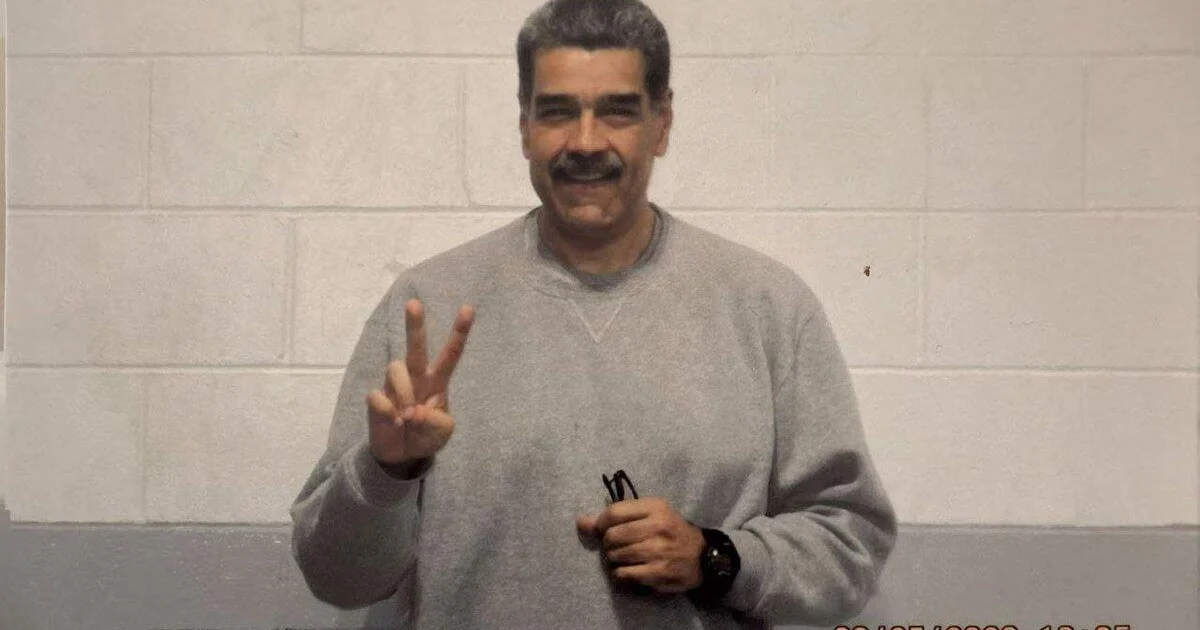
Venezuela’s ousted president Nicolás Maduro sent a message of resilience from a New York prison facility as his interim government announced a historic oil agreement with the United States. The photographs and statements, shared amid the sensitive geopolitical backdrop, highlight the ongoing tensions affecting Venezuela’s political landscape and its relations with the U.S.
What Happened
On August 30, 2026, Nicolás Maduro posted photographs and a message on his Telegram account from his prison in Brooklyn, New York, where he and his wife, Cilia Flores, have been held since their capture in Caracas during a U.S. military operation earlier this year. They face charges of drug trafficking and firearms possession, which they deny. The photos, dated June 25, depict Maduro in a gray tracksuit, making peace signs and showing signs of weight loss.
This release coincided two days after Venezuela’s interim President Delcy Rodriguez announced a landmark oil deal permitting U.S. companies to operate Venezuelan oil fields, providing the U.S. government majority control over more than 60 billion barrels of proven reserves. The initiative is framed by Venezuelan authorities as a diplomatic effort to rebuild the country’s energy sector.
Key Facts
Nicolás Maduro and his wife have been detained in Brooklyn since January 2026 facing federal drug trafficking and firearms charges. Their trial is scheduled to begin on June 1, 2027, in a New York federal court. Prosecutors accuse Maduro of orchestrating a conspiracy to traffic thousands of tons of cocaine into the U.S. by collaborating with Venezuelan law enforcement.
The U.S.-Venezuela oil deal grants the United States a controlling stake of 55% in the joint venture, combining equity participation with access to oil at cost, according to U.S. officials. Former U.S. President Donald Trump highlighted the deal as a strategic move to replenish the U.S. Strategic National Reserves.
Maduro reportedly has limited communication privileges in prison, allowed around 300 minutes monthly by phone with family and lawyers but no internet or newspaper access. His son has stated he remains in good health and occupies time with Bible study.
What This Means
The release of Maduro’s prison photographs amidst Venezuela’s new energy pact with the United States underscores the deep political rifts shaping Venezuela’s future and international relations. The oil deal signals a significant shift in Caracas’ posture toward Washington after years of antagonism, potentially influencing regional energy markets and diplomatic alignments.
For ordinary Venezuelans, the deal could mean increased foreign investment and potentially more stable oil production, though it also raises questions about sovereignty and control over national resources. For the U.S., gaining operational control over vast Venezuelan oil reserves represents a strategic advantage in energy security and geopolitical influence in Latin America.
Meanwhile, Maduro’s incarceration and ongoing legal battle spotlight the complexities of international justice intersecting with geopolitical rivalry. His message of resilience aims to maintain domestic support and assert his continued political relevance despite detention abroad.
Background
Nicolás Maduro was detained in January 2026 in a U.S. military operation in Caracas, marking a rare instance of a foreign leader captured and charged by the U.S. government. His administration had been accused by U.S. prosecutors of criminal activities tied to cocaine trafficking. Following his capture, Venezuela’s interim government under President Delcy Rodriguez engaged directly with the U.S. to finalize an oil agreement, framing their approach as one of diplomacy and economic revitalization.
What Comes Next
The legal proceedings for Nicolás Maduro and Cilia Flores are set to begin on June 1, 2027, in New York. The trial will determine the validity of drug trafficking allegations that carry potential life sentences. Meanwhile, the implementation of the oil agreement is expected to proceed under the oversight of the U.S. government and Venezuelan partners, with significant monitoring to follow the geopolitical and economic outcomes of this unprecedented arrangement.
Sources
This article is based on reporting and publicly available information from the following source:
Read more World News stories on Goka World News.