
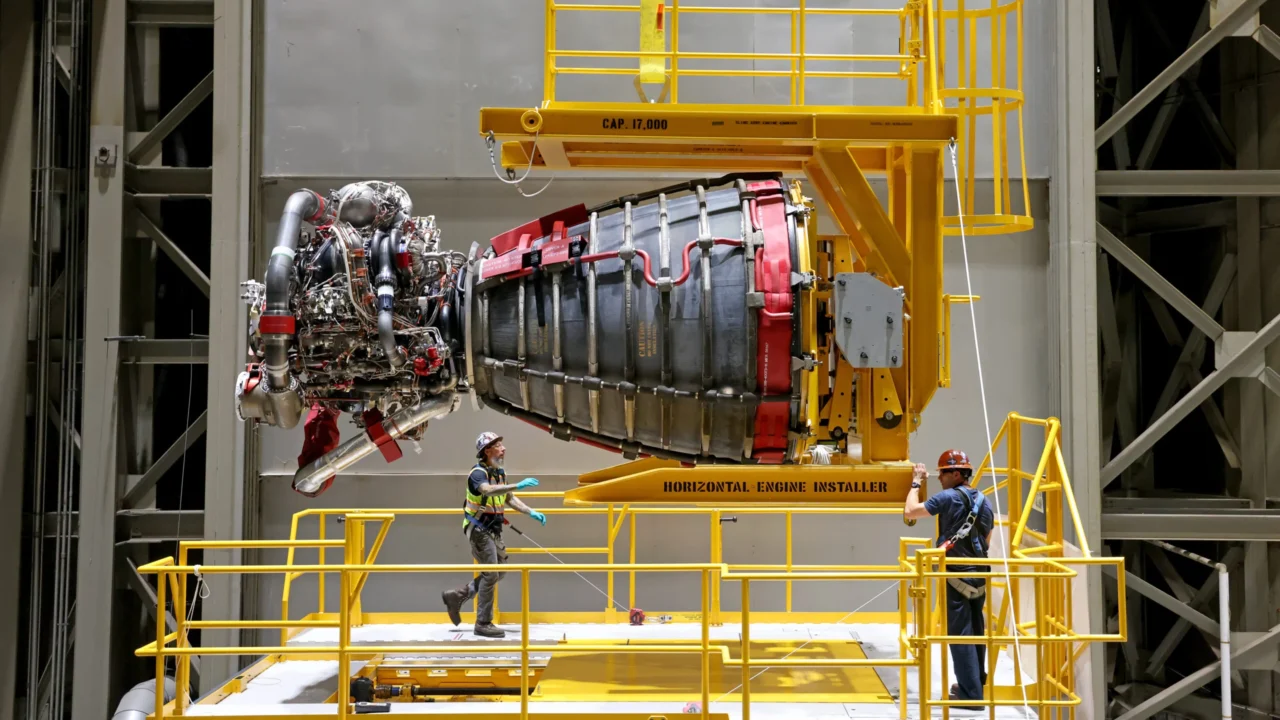
NASA will hold a virtual webinar specifically designed for the blind and low-vision community on October 2, focusing on the RS-25 engine and the future of Artemis missions. This public event offers an inclusive platform to engage with NASA’s cutting-edge space exploration technology and accessibility efforts.
What Happened
Scheduled for 2 p.m. Eastern Daylight Time on Friday, October 2, the webinar titled “The RS-25 Engine and the Future of Artemis Missions: An Accessible Webinar for the Blind and Low-Vision Community” will last approximately two hours via Zoom. Highlights include an audio-described video showcasing a test of the RS-25 engine, an interactive question-and-answer session with an Artemis program engineer, and a panel discussion focusing on accessibility in space and science fields.
Participants in the session include experts from various NASA centers: Dr. Kimberly Arcand, a visualization scientist from the Chandra X-ray Observatory; Josh Greiner, a test director at NASA’s Stennis Space Center; Dr. Craig Moore, a materials engineer from Marshall Space Flight Center; and Dr. Robert Shelton, lead simulation engineer at Johnson Space Center. Additionally, Christine Malec, a freelance writer and accessibility consultant, will contribute to the panel discussion.
Interested attendees were required to RSVP by September 25 for access details and additional information, which NASA planned to send out to registered participants in advance of the webinar.
Key Facts
The centerpiece of the webinar is the RS-25 engine, a vital component powering NASA’s Space Launch System (SLS) rockets that will carry Artemis astronauts to the Moon. The RS-25 engine underwent rigorous testing at NASA’s Stennis Space Center, with the video to be audio-described to ensure accessibility for participants with vision impairments.
The Artemis program aims to send astronauts on increasingly ambitious lunar missions, eventually establishing a sustainable Moon Base. Experts from multiple NASA centers collaborated on this presentation to highlight not only the technology behind Artemis but also the agency’s commitment to accessibility.
What This Means
This webinar represents NASA’s broader efforts to make space exploration inclusive, extending beyond scientific and engineering achievements to empower diverse communities. By tailoring content for blind and low-vision individuals, NASA acknowledges the importance of accessibility in STEM education and public engagement.
For the blind and low-vision community, participating in such specialized events offers rare opportunities to connect directly with the scientific processes and technologies shaping human spaceflight. It also underscores NASA’s responsibility to ensure that no audience is excluded from understanding or contributing to space exploration.
In practical terms, this initiative could inspire more accessible designs in future space mission outreach and educational programs, fostering a more diverse pipeline of talent in science and engineering fields critical to advancing Artemis and subsequent missions.
Background
The Artemis program, NASA’s flagship effort to return humans to the Moon, uses the RS-25 engine as one of its primary propulsion elements for the SLS rocket. This engine was originally developed for the Space Shuttle but has been upgraded extensively for Artemis missions.
Accessibility remains a pivotal societal goal for NASA as it expands its public-facing science and exploration activities. Previous NASA initiatives have included accessible materials and outreach for disabled audiences, and this webinar continues that trajectory.
What Comes Next
Following this webinar, NASA plans to continue integrating accessibility into its mission communications and educational outreach. Additional events tailored to different communities are likely as Artemis missions progress toward lunar landings and surface operations.
Sources
This article is based on reporting and publicly available information from the following sources:
Read more Space & NASA stories on Goka World News.