
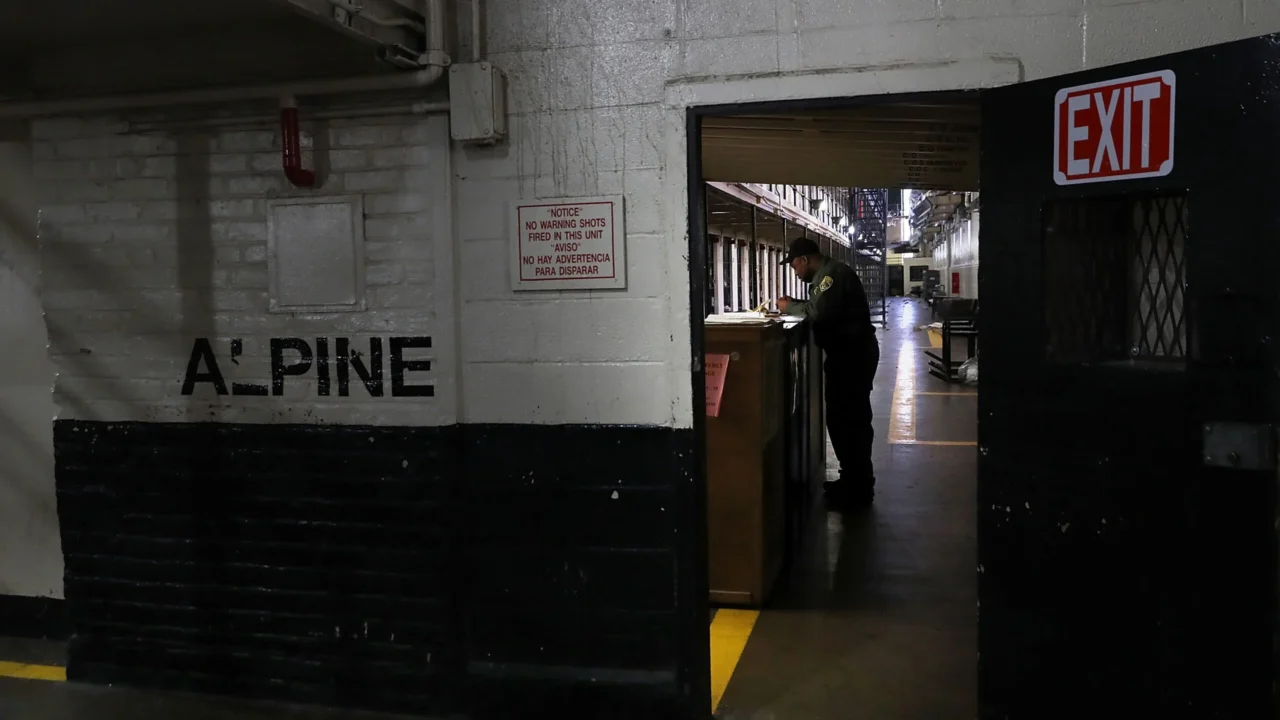
California’s effort to shield workers from extreme indoor heat has exposed a significant gap: correctional facilities. The state’s Division of Occupational Safety and Health (Cal/OSHA) recently proposed weaker heat protection standards specifically for prison workers, allowing temperatures to reach 87 degrees before triggering safeguards—higher than the 82-degree threshold set for other indoor workplaces. This disparity comes amid growing risks from intensifying heat waves linked to climate change, raising alarms among health experts and worker advocates about inadequate protections for tens of thousands of staff and incarcerated individuals in largely non-air-conditioned prisons.
What Happened
In 2024, California adopted historic indoor heat standards intended for more than one million workers in warehouses, factories, kitchens, and other workplaces, requiring employers to provide water, shade, cooldown areas, and rest breaks once temperatures reach 82 degrees. However, the state’s Occupational Safety and Health Standards Board exempted prisons, juvenile facilities, and local detention centers from these requirements after concerns from Governor Gavin Newsom’s administration that compliance costs could reach billions of dollars. Two years later, draft rules released in May 2026 by Cal/OSHA propose that workplace heat protections in correctional institutions only apply once indoor temperatures hit 87 degrees, without considering the heat index or humidity, factors that increase the perceived temperature and heat stress.
Key Facts
California operates 31 adult state prisons with an average facility age of 52 years, many located in hot regions like the Central Valley and inland Southern California where outdoor temperatures frequently exceed 100 degrees. According to a January 2026 report from the California Department of Corrections and Rehabilitation (CDCR), fewer than 25% of the 791 prison housing units have mechanical cooling such as air conditioning, relying mainly on fans and swamp coolers that struggle to mitigate heat in thick, uninsulated concrete buildings. In 2024 alone, 86 days were recorded with indoor temperatures of at least 90 degrees, and 46 days surpassed 95 degrees in at least one prison.
The proposed heat standard for prisons does not require factoring in the heat index, radiant heat, or humidity, while the 2024 standard for other workplaces sets an 82-degree threshold and includes these considerations. Cal/OSHA estimates the fiscal impact of installing cooling in prisons could range from $900,000 to $6 billion, though detailed cost breakdowns have not been publicly shared.
What This Means
The proposed lower standard for prison workers highlights a troubling inequity in workplace safety amid rising temperatures driven by climate change. Correctional staff and incarcerated people are especially vulnerable given their inability to leave or adjust their environment during heat spikes, exacerbating risks for heat exhaustion and heat stroke. Unlike workers in other sectors who can seek shade or pause tasks, prison workers lack such autonomy, and many facilities lack sufficient cooling infrastructure. This gap signals a broader public health challenge in protecting marginalized populations whose health outcomes are disproportionately affected by environmental hazards.
Moreover, the decision to delay protections in prisons reflects the complex balance between budget constraints and worker safety. The high estimated costs to retrofit aging facilities with air conditioning systems underscore difficulties in addressing heat risk fully, yet the health consequences of inaction may increase medical incidents, strain health services, and deepen inequalities. The lack of inclusion of heat index and humidity in the prison rules omits critical environmental stressors, potentially underestimating the true hazard for those exposed.
Background
California has led efforts nationally to address occupational heat risks, establishing outdoor heat protections for agricultural workers following fatal incidents in 2005 and extending rules indoors in 2024. The state’s climate, now about 2.5 degrees warmer annually than in the late 19th century, has seen nine of its 10 warmest years since 2014, with 2026 projected as potentially the hottest. Despite this, corrections facilities built decades ago often paid little attention to comfort or heat mitigation for workers or inmates, creating hazardous working conditions as temperatures rise.
What Remains Unclear
The exact financial cost of implementing full-scale cooling in all California correctional facilities remains uncertain as state agencies have withheld detailed estimates from public scrutiny. It is also unclear when the weaker heat safety regulations for prisons will be finalized or fully implemented, as Cal/OSHA stated timelines for these standards are still being developed. Furthermore, whether and how these measures will adequately address the specific challenges posed by prison staffing and security requirements during heat interventions has yet to be determined.
Sources
This article is based on reporting and publicly available information from the following sources:
Read more Climate & Environment stories on Goka World News.