
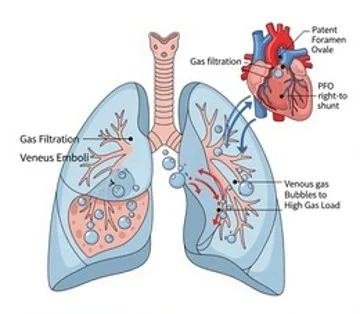
A NASA expert panel recently reviewed the latest data on decompression sickness (DCS), venous thromboembolism (VTE), and patent foramen ovale (PFO) risks relating to extravehicular activity (EVA) protocols and spaceflight health. This assessment aims to update risk mitigation strategies ahead of the Artemis lunar missions and subsequent deep space exploration efforts.
What Happened
The working group, integrating findings from recent NASA special publications and updates to NASA standards, convened to assess human cardiovascular health risks during spacewalks and hypoxic environments typical of lunar surface operations. They specifically reviewed evidence regarding the role of PFO, a cardiac anatomical variation, and its potential impact on DCS and VTE in astronauts. The panel synthesized results from the September 2024 “Assessment of Patent Foramen Ovale as Related to Decompression Sickness” and the April 2026 “Risk of Venous Thromboembolism in Spaceflight” working groups, along with updates in the NASA-STD-3001 Volume 2 standards, to formulate comprehensive recommendations for astronaut safety.
Key Facts
NASA’s evaluation concludes that ground-based studies no longer need to exclude subjects solely based on the presence of large venous gas emboli (LVGE). Astronaut selection criteria will remain unchanged regarding PFO presence, as evidence indicates PFO is not a major risk factor for VTE or embolic complications under normoxic or hypoxic space habitat conditions. The relationship between bubble grades and DCS risk during partial gravity prebreathe protocols remains inconclusive, particularly for lunar EVA operations. The group differentiated PFO sizes by grade: small PFOs (Grade 1 or 2) are not considered significant risk contributors, whereas there is debate around the benefits of screening or closing large PFOs (Grade 3 or above). Accordingly, universal screening or exclusion is not recommended, but crew members informed of a large PFO may consider closure options. The panel also emphasized the need for clear clinical guidance on analgesic and aspirin use surrounding EVAs, given concerns that pain medications might mask early DCS symptoms.
What This Means
This assessment reflects NASA’s commitment to refining astronaut health protocols based on evolving evidence, balancing crew safety with mission feasibility. Eliminating automatic exclusion of subjects with LVGE in testing broadens the research population, enhancing data quality across more representative astronaut profiles. By clarifying that small PFOs pose minimal risk, NASA avoids unnecessary medical interventions that could delay mission readiness. However, the mixed views on managing larger PFOs highlight the complexity of cardiovascular risk management in microgravity and planetary habitats. Given that DCS events could jeopardize lunar surface operations, nuanced prebreathe and monitoring protocols informed by these findings will be critical to sustaining crew health during Artemis missions.
The focus on medication guidance underscores the challenge of detecting DCS symptoms in space, where symptom management directly impacts mission success. These recommendations collectively advance NASA’s ability to mitigate serious health threats, ensuring astronauts remain fit to conduct EVAs in varying gravitational environments and prolonged spaceflight.
Background
Decompression sickness arises when dissolved gases, predominantly nitrogen, form bubbles in body tissues during rapid pressure changes, a significant concern for astronauts performing EVAs that require a shift to lower pressure suits. Venous thromboembolism, or blood clots, poses an additional cardiovascular risk in microgravity. Patent foramen ovale, a heart septal defect found in a fraction of the population, can allow venous bubbles to bypass the lung’s filtration and directly enter systemic circulation, potentially exacerbating DCS or vascular complications. NASA’s Artemis program aims to return humans to the Moon and establish a sustainable presence, requiring rigorous health risk assessments for the unique challenges of reduced gravity and EVA operations.
What Comes Next
NASA plans to incorporate these recommendations into updated human health standards for Artemis mission crew selection and pre-EVA protocols. Ongoing research and data collection during Artemis missions will refine risk models surrounding PFO implications and DCS. The agency will also develop enhanced clinical guidelines addressing analgesic use before and after spacewalks to improve in-flight symptom recognition and medical response strategies.
Sources
This article is based on reporting and publicly available information from the following sources:
Read more Space & NASA stories on Goka World News.