
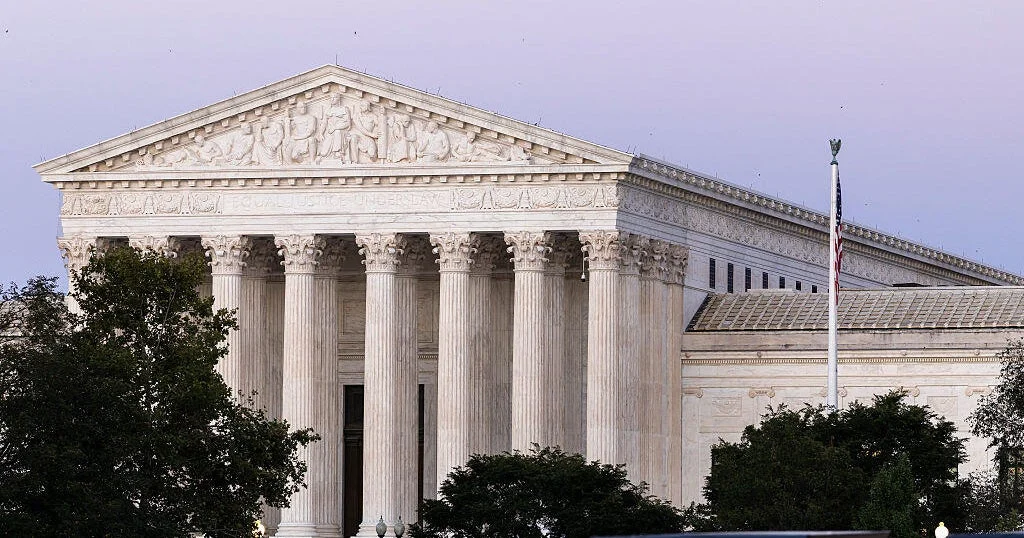
The fight over Missouri’s redrawn congressional map reached the U.S. Supreme Court once again on September 22, 2026, marking the third time the justices have been asked to intervene in a high-stakes political dispute. The GOP-backed map, supported by former President Donald Trump, is designed to help Republicans gain an additional House seat in Missouri ahead of the midterm elections that will shape control of Congress.
What Happened
On the evening of September 22, a federal appeals court issued a rare decision ordering Missouri to reinstate the new congressional districts favored by Republicans. This came despite the Supreme Court’s earlier move on September 10 to block such a last-minute change ahead of the November elections. Missouri’s Secretary of State, Denny Hoskins, had appealed to the Supreme Court, but Justice Brett Kavanaugh declined to stay the Missouri Supreme Court’s ruling earlier that week.
The Missouri Supreme Court had mandated that the state must use its previous, voter-approved congressional map from 2022 unless the new districts were approved in a statewide referendum. The new districts significantly alter the composition of Missouri’s congressional delegation, including reshaping a Kansas City-based district currently held by Democratic Representative Emanuel Cleaver.
The latest emergency appeal to the U.S. Supreme Court requires a response by midday Wednesday, as the legal tussle fuels uncertainty for Missouri’s electorate at a critical juncture. Absentee voting is already underway based on the 2022 districts, potentially affecting the voting process for more than a million Missourians.
Key Facts
- The new map aims to boost Republicans from six to seven of Missouri’s eight House seats.
- Justice Brett Kavanaugh previously declined a stay request, supporting the Missouri Supreme Court’s directive to keep the 2022 map without voter approval for changes.
- Absentee voting in Missouri is occurring under the older 2022 congressional districts.
- The federal appeals court ruling contradicts the Supreme Court’s September 10 decision to halt the new map’s use for the upcoming election.
- The disputed redistricting is part of a wider wave of mid-decade map changes encouraged by former President Trump to improve GOP prospects nationwide.
What This Means
The ongoing legal battle highlights the complexities and political tensions surrounding mid-decade redistricting efforts, which have become increasingly common in states controlled by one party seeking electoral advantage. Missouri’s case exemplifies how redistricting disputes can create voter confusion, disrupt election preparations, and cast uncertainty over representation for large populations.
If the new GOP-backed map is allowed, it would likely strengthen Republican influence in Congress by adding a seat, potentially impacting legislative priorities at the national level. However, requiring voter approval for such significant changes underscores the democratic principle that district lines should not be drawn unilaterally by political actors without public consent. This case also emphasizes the critical role of the Supreme Court in resolving conflicts over election laws that affect voter rights and the balance of political power.
For Missourians, the resolution of this dispute will determine which representatives appear on their ballots and which communities are grouped together, affecting local advocacy and federal funding allocation in the years ahead.
Background
Redistricting traditionally occurs once every decade following the U.S. Census, but in recent years, some states have implemented mid-decade map changes to gain political advantage. The current Missouri dispute originated when former President Trump encouraged Republican-led states to redraw district boundaries mid-cycle ahead of the 2026 midterm elections. Missouri’s new map faced immediate legal challenges culminating in the Missouri Supreme Court’s requirement for a public referendum before changes could be applied.
What Remains Unclear
It is not yet confirmed whether the U.S. Supreme Court will ultimately allow Missouri to implement the new districts before the November election. The Court’s decision on the latest emergency appeal will determine if absentee ballots cast so far under the old map remain valid or if changes will be made at short notice.
What Comes Next
The U.S. Supreme Court has set a deadline for supporters of the new map to respond by midday Wednesday, September 23. Beyond that, the Court’s ruling will clarify which map Missouri will use for the 2026 congressional elections. This decision will be closely watched for its broader implications on election administration and redistricting authority nationwide.
Sources
This article is based on reporting and publicly available information from the following source:
Read more Politics stories on Goka World News.