
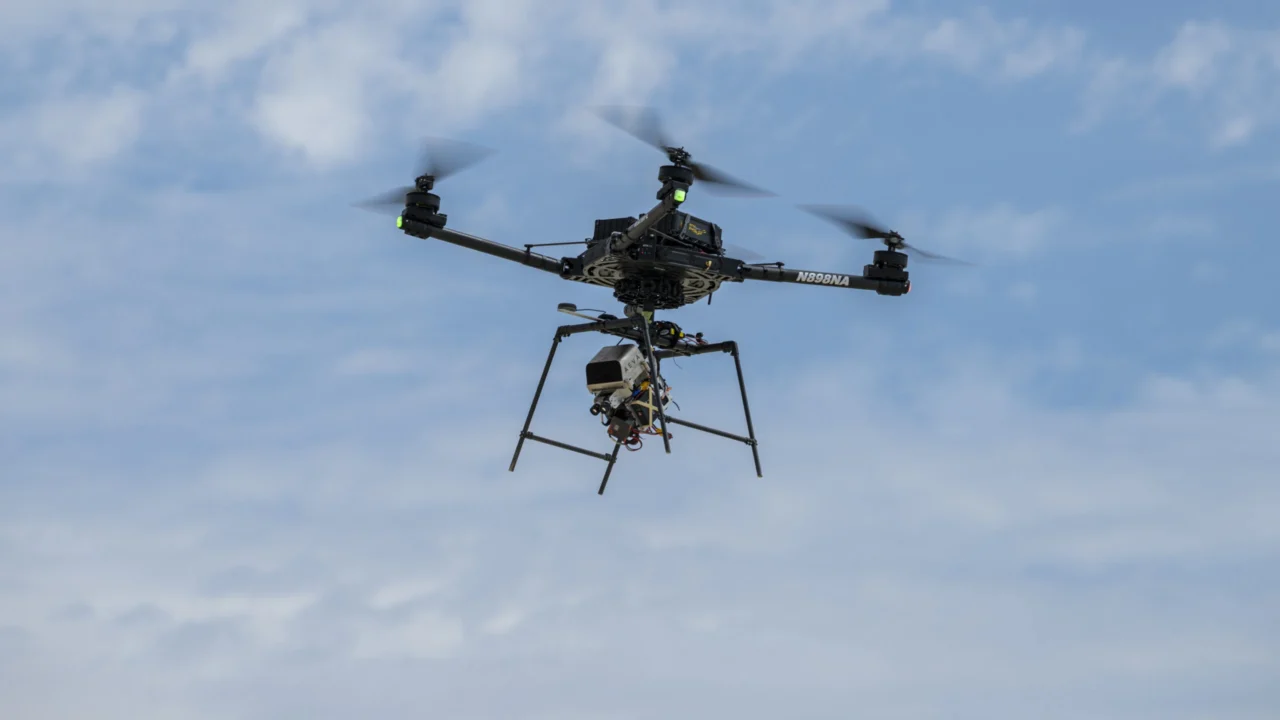
NASA’s Johnson Space Center has achieved a significant milestone in developing technologies to enable safe and precise landings on extraterrestrial surfaces. The agency’s Safe and Precise Landing – Integrated Capabilities Evolution (SPLICE) system recently completed successful simulated lunar descent and landing maneuvers, demonstrating advanced navigation and guidance capabilities tailored for the Moon and other challenging celestial bodies.
What Happened
On August 27, 2026, NASA researchers tested the SPLICE experiment using an Alta-X drone near the Armstrong Flight Research Center in Edwards, California. This advanced guidance and navigation system, developed by engineers at NASA’s Johnson Space Center in Houston, executed simulated descents and landing sequences akin to those expected during actual Moon missions. SPLICE’s design incorporates specialized processing and navigation techniques to achieve pinpoint landing accuracy, particularly in rugged or previously unexplored areas with high scientific interest.
Key Facts
The SPLICE system leverages integrated capabilities for guidance, navigation, and real-time processing to manage complex landing scenarios. The successful tests involved the Alta-X drone performing controlled maneuvers that mimic expected flight dynamics during extraterrestrial landings. NASA confirmed that SPLICE’s technology focuses on enabling missions to the Moon, Mars, icy moons, and other destinations where safe access to scientifically rich terrain is essential.
What This Means
This successful demonstration marks a crucial step toward making future robotic and crewed landings safer and more reliable on destinations beyond Earth. By improving precision landing accuracy, SPLICE can allow spacecraft to touch down in areas that were previously too hazardous or inaccessible, potentially unlocking new research opportunities on the Moon’s surface and other planetary bodies. For example, landing near lunar pits, resource-rich polar regions, or Mars’s rugged terrain could greatly enhance scientific returns and aid long-term exploration efforts.
Moreover, the technology’s adaptability to diverse environments—including icy moons, which represent key targets for astrobiology—expands the horizons of planetary science. The ability to autonomously navigate and adjust to unknown or dynamic landing zones means that future exploration missions can be more ambitious, less constrained by risk factors, and better able to support prolonged surface operations critical for sample collection and habitat establishment.
Background
Previous NASA missions have underscored the challenges of landing on extraterrestrial terrain, with many spacecraft limited to fixed or well-characterized sites. SPLICE builds on heritage technologies but integrates cutting-edge processing and sensor fusion, enabling more dynamic decision-making during descent. This advancement aligns with NASA’s Artemis program goals and broader ambitions to explore Mars and potentially habitable icy worlds in the solar system.
What Comes Next
NASA plans to continue refining SPLICE through further testing and integration with lander platforms destined for upcoming missions. The agency will assess the system’s performance in more complex and realistic scenarios, eventually aiming for operational deployment on crewed lunar landings and robotic exploration of Mars and its moons.
Sources
This article is based on reporting and publicly available information from the following sources:
Read more Space & NASA stories on Goka World News.