
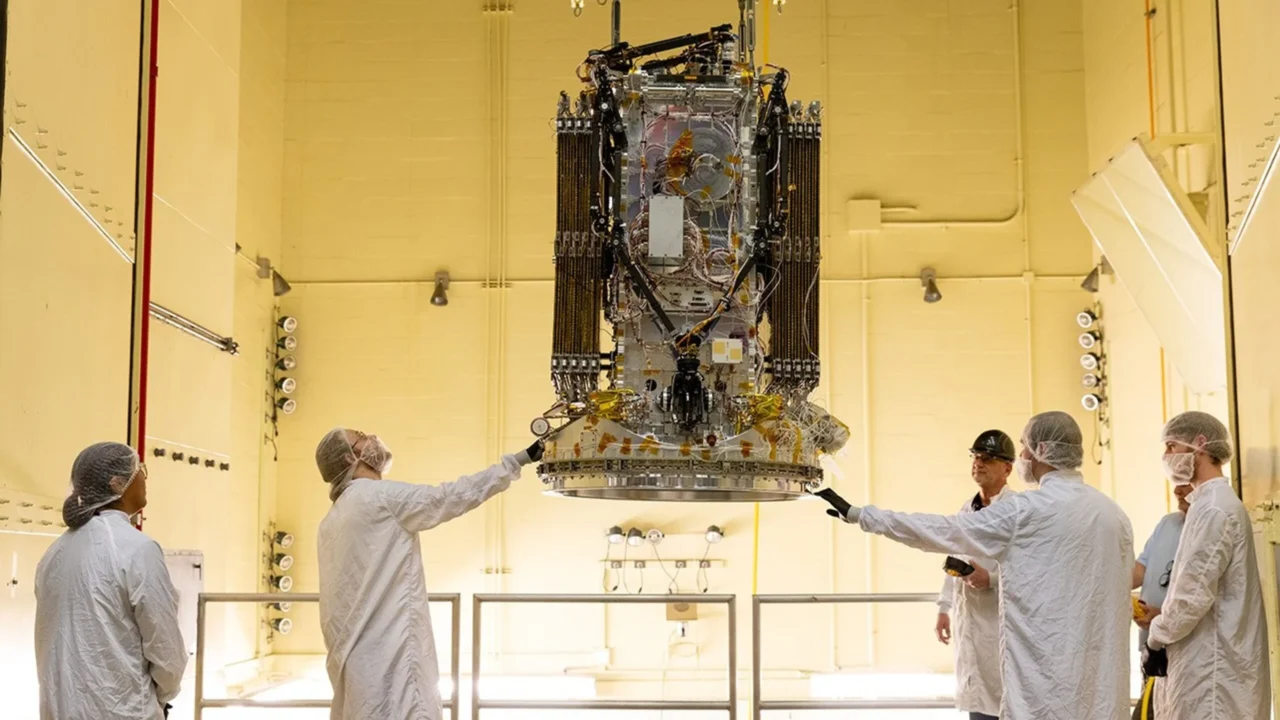
NASA will demonstrate a robotic servicing mission aimed at extending the operational life of its Neil Gehrels Swift Observatory by boosting its orbit. The mission involves Katalyst’s LINK spacecraft, launching aboard a Northrop Grumman Pegasus XL rocket from NASA’s Wallops Flight Facility in Virginia on June 17.
The LINK spacecraft is designed to rendezvous with the Swift telescope and perform an orbital raise maneuver, which will increase the altitude of Swift, thereby prolonging its science mission. Swift, launched in 2004, is a key asset in studying gamma-ray bursts and other high-energy cosmic events, serving as an early alert system for transient astronomical phenomena.
Media representatives from the United States and abroad are invited to apply for onsite access to witness the launch and deployment. The Pegasus XL rocket will be air-launched from an L-1011 Stargazer aircraft. Interview opportunities will be available on-site, and media will receive images and video of the LINK spacecraft, which will already be encapsulated inside the rocket at launch.
Additionally, NASA and Katalyst will host an audio-only media teleconference on June 17 to preview the mission. The teleconference will stream live on NASA’s YouTube channel, with details about participants and timing to be announced closer to the event.
U.S. media accreditation requests for onsite attendance must be submitted by 4 p.m. EDT on June 10. International media without U.S. citizenship have an earlier application deadline of 3 p.m. EDT on May 27. All accreditation requests should be sent to Amy Barra at NASA’s Wallops Flight Facility.
Why it matters
This mission represents an important step in the use of robotic servicing spacecraft to extend the lifespan of aging satellites, offering a cost-effective alternative to launching new instruments. By raising Swift’s orbit, NASA can continue critical observations of gamma-ray bursts and other high-energy events without the need for a replacement telescope in the near term.
Background
The Neil Gehrels Swift Observatory has been central to NASA’s high-energy astrophysics missions since its launch in 2004. Its rapid-response capability to gamma-ray bursts acts as a dispatcher, alerting other space telescopes and observatories to follow up on transient events. Over time, orbital decay has reduced Swift’s altitude, threatening the continuation of its operations. This mission using LINK seeks to demonstrate capability in autonomous orbital maintenance, which could benefit future space telescopes and satellite fleets.
Sources
This article is based on reporting and publicly available information from the following source:
Read more Space & NASA stories on Goka World News.