
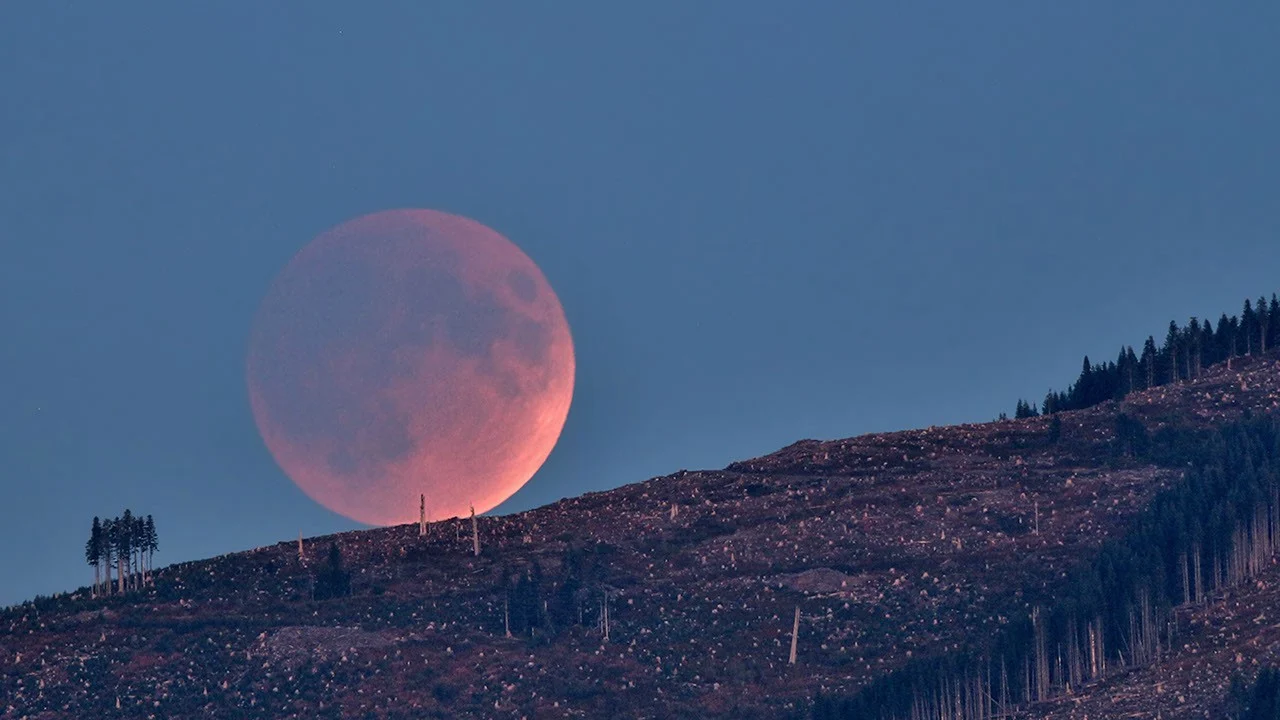
August 2026 offers a rich calendar for skywatchers with several prominent celestial events, as detailed by NASA’s Jet Propulsion Laboratory. The month features a total solar eclipse visible across parts of northern Russia and Europe, the peak of the annual Perseid meteor shower under dark skies, Venus reaching its brightest evening position, and a partial lunar eclipse observable from much of the Americas and beyond.
What Happened
On August 12, a total solar eclipse will sweep across northern Russia, Greenland, Iceland, northern Spain, and the northwestern tip of Portugal. Partial eclipse viewing will be possible across extensive regions of the United States, spanning from Alaska to North Carolina, although the moon will only cover a small portion of the Sun there. NASA emphasized the importance of eye safety, recommending the use of certified eclipse glasses or solar viewers, and warned against using binoculars or telescopes without solar filters.
That same night, the Perseid meteor shower will reach its peak, continuing into the early hours of August 13. Thanks to the New Moon coinciding with the eclipse, dark skies will provide ideal conditions for meteor watching. The Perseids are caused by Earth crossing debris from Comet Swift-Tuttle, producing bright, fast streaks as the particles burn up in our atmosphere. Observers are advised to look toward the northeastern horizon where the Perseus constellation rises, though meteors can appear anywhere in the sky.
Between August 14 and 16, Venus will arrive at its greatest eastern elongation, the planet’s widest apparent distance from the Sun during this evening appearance. It will shine brightly low in the western sky just after sunset, outshining all stars nearby. Through a telescope, Venus will show a half-illuminated phase, akin to a small lunar crescent.
To close the month, a partial lunar eclipse will occur on the night of August 27 into the early hours of August 28, visible from much of North and South America, as well as parts of Europe and Africa. At maximum coverage, about 93% of the Moon’s diameter will pass through Earth’s dark central shadow, the umbra, casting a noticeable coppery tint over the eclipsed section. Unlike solar eclipses, lunar eclipses are safe to view directly and binoculars or small telescopes can enhance the experience.
Key Facts
- The total solar eclipse path includes northern Russia, Greenland, Iceland, northern Spain, and part of Portugal on August 12, 2026.
- Partial solar eclipses will be visible across various U.S. states, with varying coverage.
- The Perseid meteor shower peaks August 12–13 with dark skies due to the New Moon.
- Venus reaches greatest eastern elongation and appears brightest in the evening sky on August 14–16.
- The partial lunar eclipse on August 27–28 covers about 93% of the Moon’s diameter in Earth’s umbra.
- The lunar eclipse will be visible throughout much of the Americas and parts of Europe and Africa.
- NASA confirms all observations and provides safety recommendations for viewing eclipses.
What This Means
August’s celestial events provide an accessible and striking glimpse of our dynamic solar system in action, offering unique viewing opportunities for enthusiasts and casual observers alike. The total solar eclipse, while only visible in select northern pathways, represents a significant astronomical milestone that connects viewers directly with the motions of the Earth-Moon-Sun system.
The Perseid meteor shower’s peak under a New Moon creates optimal darkness conducive to spotting numerous meteors, fostering public interest in astronomy and encouraging outdoor night awareness. Venus’s brilliant evening display helps anchor the starry sky for observers while serving as a reminder of planetary phases akin to the Moon’s, a concept often overlooked outside professional astronomy.
The partial lunar eclipse rounds out the month with a safe and visually dramatic experience of Earth’s shadow crossing the Moon, allowing observers worldwide to appreciate celestial mechanics without special equipment or safety precautions. Together, these events underscore the enduring value of skywatching activities in connecting humanity with the broader cosmos and inspiring scientific curiosity.
Background
These annual and periodic celestial phenomena have long been studied by astronomers and observed by the public. The Perseid meteor shower occurs every August when Earth passes through debris left by Comet Swift-Tuttle, producing one of the most reliable and dazzling meteor showers. The cycles of solar and lunar eclipses arise from the alignments within the Earth-Moon-Sun system, with each eclipse differing in visibility depending on location and timing.
Venus’s greatest elongations mark moments when it appears farthest from the Sun in Earth’s sky, offering the best views of the planet’s phases and brightness. These predictable events serve as stepping stones for both professional research and amateur astronomy alike.
What Comes Next
Following August’s eclipses and meteor display, skywatchers can turn to other seasonal highlights in the coming months. NASA also encourages keeping up with updates from their missions exploring the solar system and beyond, accessible at science.nasa.gov, to expand understanding of the cosmos beyond these visible events.
Sources
This article is based on reporting and publicly available information from the following sources:
Read more Space & NASA stories on Goka World News.