
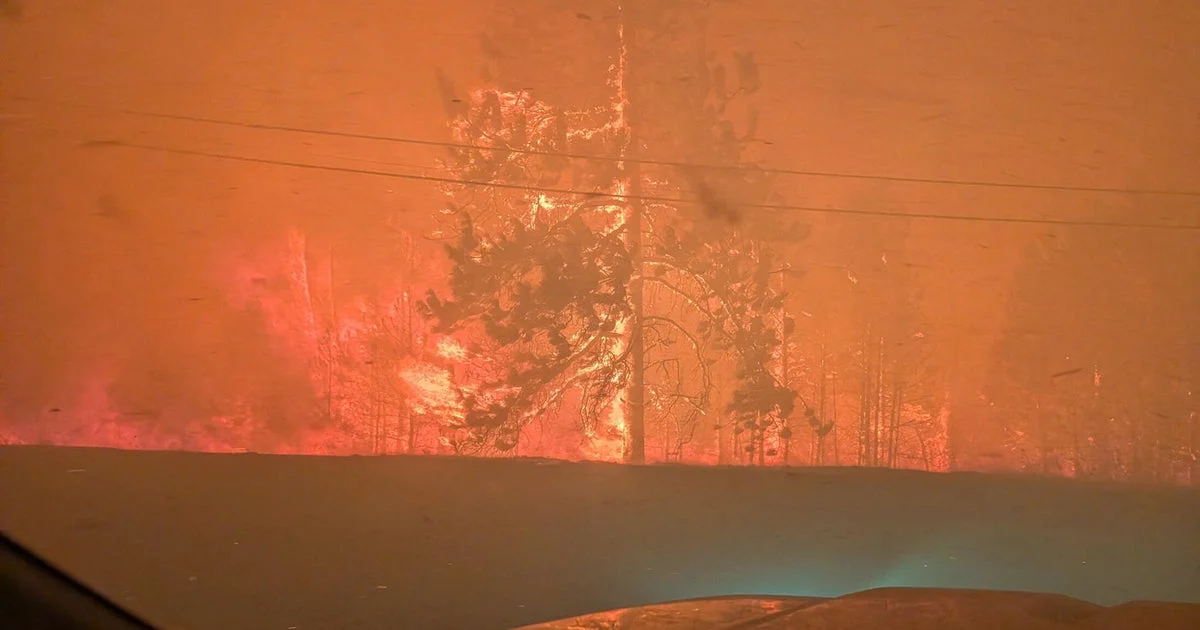
A rapidly spreading wildfire in British Columbia, Canada, has forced the evacuation of over 20,000 residents, destroyed homes, and resulted in at least one fatality, highlighting the severity of the current wildfire season in the region.
What Happened
Beginning on the evening of August 7, 2026, the Bald Range wildfire in the Okanagan Lake area of British Columbia expanded quickly toward populated communities. By August 9, about 12,000 people from Summerland and 8,000 from nearby Peachland were ordered to evacuate due to the fire’s rapid advance. The provincial government declared a state of emergency on August 8 as more than 100 wildfires burned across British Columbia, nearly half of which were uncontrolled amid hot, windy conditions and prolonged drought.
Search-and-rescue operations, including efforts by 18 firefighting aircraft, were underway to locate and evacuate residents trapped by the fires. Tragically, Royal Canadian Mounted Police confirmed that an 80-year-old woman died while trying to escape the blaze. The wildfire has consumed over 53 square miles in the region and destroyed numerous homes, though officials have not yet completed a damage assessment due to ongoing fire activity.
Key Facts
British Columbia Premier David Eby announced the state of emergency and described the fire growth as an unprecedented escalation. The blaze became intense enough to produce its own weather system and lightning. Summerland, a community of roughly 12,000 residents, suffered “significant structure loss,” according to Eby’s office. Evacuations affected around 20,000 people around Okanagan Lake, with many fleeing on congested roads. Emergency Management Minister Eleanor Olszewski approved federal assistance for shelter and accommodation support for displaced residents. Highway 97, the major transportation artery in the area, was closed between Peachland and Penticton.
What This Means
The British Columbia wildfires represent a growing crisis with serious implications for regional safety, infrastructure, and community stability. The forced evacuations of tens of thousands are disrupting lives and straining emergency response resources. The fires’ intensity and speed underline how increasingly extreme weather and drought are exacerbating wildfire risks. The destruction of homes not only causes immediate displacement but also long-term economic and emotional hardship for affected residents. Moreover, the smoke from British Columbia’s wildfires has previously impacted air quality across Canada and into the United States, demonstrating cross-border environmental consequences that can affect public health beyond provincial borders.
The scale of these fires underscores the urgent need for enhanced wildfire management and climate adaptation strategies in Canada. The declaration of a state of emergency, which grants the government special powers to manage evacuations and resources, reflects the crisis’s severity but also signals the likelihood of further challenges as fire season continues.
Background
British Columbia typically experiences about 1,600 wildfires annually. However, in recent years, wildfire seasons have become more severe, with larger and more destructive fires driven by climate change factors such as rising temperatures, prolonged droughts, and erratic weather patterns. The current year’s hot and windy conditions have created “explosive” fire behavior, making containment difficult. Canada has repeatedly faced mass evacuations and transboundary smoke impacts affecting major U.S. cities, contributing to diplomatic tensions over air quality concerns in the past.
What Remains Unclear
As of now, officials have not provided a full assessment of total property damage or confirmed the exact number of people still missing or trapped. The fire perimeter remains active, preventing a comprehensive evaluation of the affected areas. The long-term environmental impact and timeline for containment efforts remain uncertain given the rapidly shifting conditions.
What Comes Next
Authorities continue to conduct search-and-rescue missions and monitor fire progression. The provincial government is utilizing emergency powers to regulate travel, secure accommodations for evacuees, and coordinate federal assistance. Further updates on damage assessments and containment progress are expected as firefighting efforts continue under volatile weather conditions.
Sources
This article is based on reporting and publicly available information from the following source:
Read more Climate & Environment stories on Goka World News.