
On August 12, 2026, a total solar eclipse will sweep across parts of the Northern Hemisphere, offering a rare celestial spectacle visible in northern Europe and Spain. Residents in portions of the United States will witness a partial eclipse, with varying degrees of coverage depending on their location.
What Happened
The total solar eclipse will first be visible in extreme northern Russia at 1 p.m. Eastern Time (17:00 UTC), then proceed across northeast Greenland and western Iceland by mid-afternoon. Totality will peak in Reykjavík at 5:48 p.m. local time. It will cross the northern Atlantic, becoming visible in the UK, where London will experience about 91% totality at approximately 2:13 p.m. ET. The event will conclude in northern Spain around 2:30 p.m. ET, with Valencia experiencing totality at 8:32 p.m. local time.
Although the path of totality primarily passes through regions such as northern Greenland, western Iceland, and northern Spain, a significant portion of Europe, including major cities like Madrid, London, and Paris, will see at least 90% of the sun covered.
In the United States, only a partial eclipse will be visible. Fairbanks, Alaska, will experience the most substantial coverage at approximately 37%, while cities on the East Coast, including Boston (16%), New York City (9%), Philadelphia (7%), and Toronto (8%) will see smaller partial eclipses occurring in the early afternoon.
Key Facts
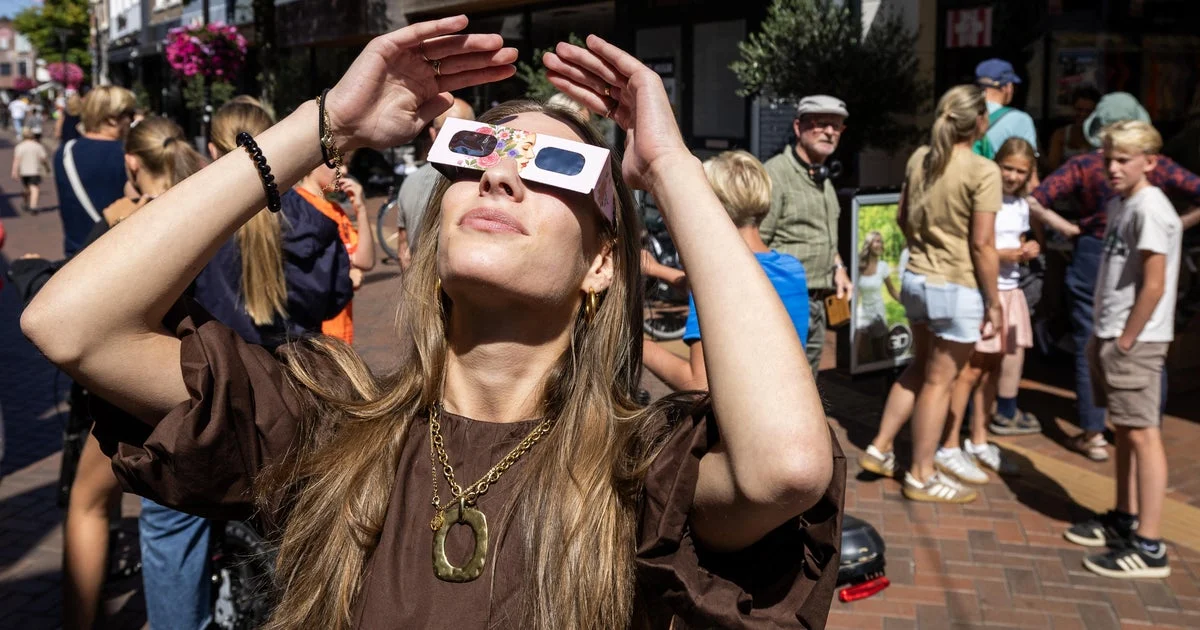
The total eclipse phase will last about two minutes in the path of totality. Observers in this zone should use certified solar eclipse glasses to protect their eyes, except during the brief totality period when it is safe to remove them.
The entire total eclipse event—from its first visibility in Russia to its end in Spain—will span roughly one hour and 45 minutes. CBS News will provide live streaming coverage beginning at 2 p.m. ET, featuring on-site reporting from Mallorca, Spain.
The next total solar eclipse visible across the United States will be in 2044, limited to states including Montana, North Dakota, and South Dakota. A more widely visible U.S. total eclipse will follow in 2045, stretching coast to coast from Northern California to Florida.
What This Means
This 2026 eclipse represents a rare astronomical event offering educational and recreational opportunities for viewers within the path of totality and beyond. For those in the U.S., though totality remains out of reach, the partial eclipse still offers a chance to connect with a significant natural phenomenon, providing heightened awareness of celestial mechanics and the dynamic relationship between the sun and moon.
Communities along the partial eclipse path may see increased interest in astronomy, potentially inspiring educational programs and public events centered on the eclipse. Moreover, the event emphasizes the importance of proper eye safety, highlighting how critical it is to use appropriate protective eyewear to avoid permanent retinal damage when viewing solar eclipses.
For those living outside the totality path, awareness of the precise timings and partial viewing percentages allows better preparation to observe this event safely and enjoyably. It also serves as a reminder of the infrequency of such events at any one location, with some areas, such as parts of Spain, not having witnessed total eclipses since 1905.
What Comes Next
Viewers interested in witnessing the total eclipse in 2026 who are outside the path of totality may consider travel plans to regions like Iceland or northern Spain to experience the full event. Planning ahead is essential, given the limited width of the totality path and the brief duration of total coverage.
Meanwhile, those in the U.S. have several future total eclipse events to look forward to, notably the 2044 eclipse localized in the northern states and the 2045 coast-to-coast eclipse providing broader accessibility. The longest wait for a northeastern U.S. total eclipse will be until 2079.
Sources
This article is based on reporting and publicly available information from the following sources:
Read more Space & NASA stories on Goka World News.